Table of Contents
Introduction to SAP Courses
SAP Course: What Is SAP? Understanding the Basics
Why SAP Skills Matter in Today’s Job Market
Types of SAP Courses and Modules
• Functional SAP Courses
• Technical SAP CoursesWho Should Learn SAP
SAP Course Duration, Fees, and Eligibility
Career Avenues After SAP Certification
How to Choose the Best SAP Course
Conclusion
Frequently Asked Questions
Introduction to SAP Courses
It is important to understand what an SAP course means to anyone who plans a career in the fast-growing world of ERP and enterprise management. The ERP solution, SAP, is among the most trusted technologies across industries, including manufacturing, finance, IT, logistics, healthcare, and retail. With business operations continuing to shift towards digital systems, the demand for SAP professionals is increasing faster than ever. This guide explains all about SAP courses, the advantages accruable from them, modules, career paths, and how you can start your SAP journey in 2025.
SAP Course: What Is SAP? Understanding the Basics
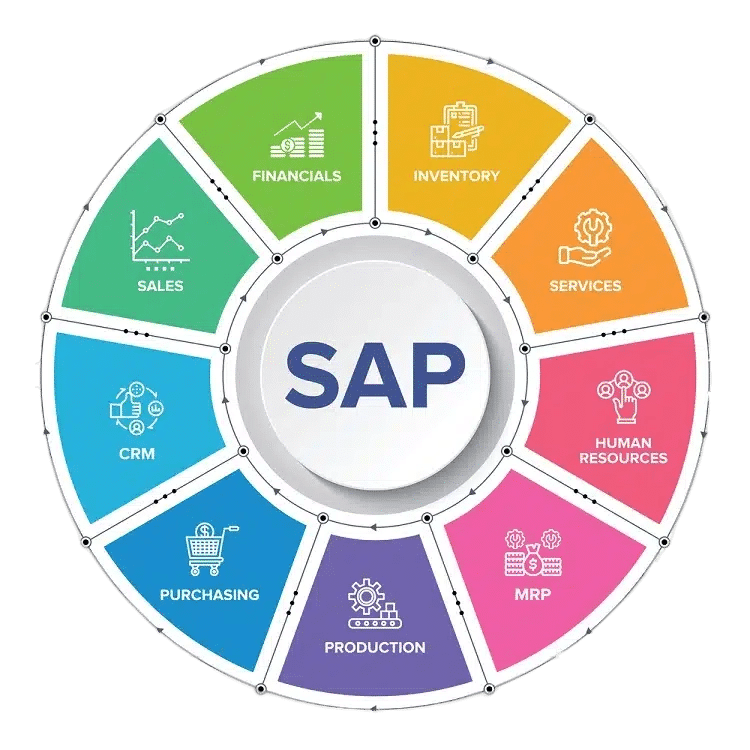
Before understanding what an SAP course is, one should understand why SAP has become a global standard. The abbreviation SAP stands for Systems, Applications, and Products in Data Processing. It assists companies in managing operations in real time, such as finance, HR, logistics, sales, and production. Industry modernization of workflows has made SAP-certified professionals increasingly valuable.
What Is an SAP Course? Full Overview for Beginners
The general question among students and professionals is, what is the SAP course, and how does it help in building a successful career? An SAP course is one form of professional training that teaches you to work on SAP ERP systems such as SAP ECC and SAP S/4HANA. These programs cover functional and technical modules, practical training, business processes, and real-time project skills.
Also, a structured course in SAP will help you understand system configurations, business workflows, reporting tools, and enterprise operations. This hence makes SAP professionals indispensable both in technical and functional areas of job assignments.
Why SAP Skills Matter in Today’s Job Market
Learning SAP does not only upgrade your resume; it opens a whole horizon of high-paying opportunities all over the world. Additionally, companies would prefer SAP-trained candidates because they are able to manage processes more efficiently and reduce errors while also supporting digital transformation. The emergence of cloud-based SAP solutions increases the demand for qualified experts even further.
Types of SAP Courses and Popular Modules
What Are SAP Course Training Categories?
Understanding what an SAP course is requires knowledge of its major categories. SAP courses are divided into two main paths:
Functional SAP Courses – What Is an SAP Course in Business Modules?
Functional SAP courses are ideal for students of finance, HR, logistics, supply chain, and business backgrounds. Some popular functional modules are:
SAP Materials Management Overview
SAP SD – Sales & Distribution
SAP PP stands for Production Planning
SAP QM (Quality Management)
For detailed module options, please consult our internal course directory at SAP Course Details.

Technical SAP Courses – What Is an SAP Course for Developers?
Technical modules target programmers or those persons with IT graduate courses, to wit:
SAP ABAP
SAP Basis
SAP S/4HANA Technical
SAP Security
SAP BTP: Business Technology Platform
SAP UI5/Fiori
Students looking for deep technical skill explanations can find a detailed industry analysis here: Complete SAP Training Guide.

Who Should Learn SAP?
SAP courses have been designed for a wide array of learners, including freshers, working professionals, and people looking to switch careers. Moreover, SAP-certified professionals are preferred across industries in India and abroad due to their practical and process-oriented approach.
SAP Course Duration, Fees, and Eligibility
SAP courses usually take anywhere from 2 to 6 months, depending on the module and mode of training. The fees vary from institute to institute and module type but usually are within reach for students and working professionals.
Eligibility includes:
Basic computer knowledge
Graduation in any field, technical or non-technical
Interest in business processes or enterprise technology
Career Opportunities After SAP Certification
The reason why students search for what an SAP course is is mainly for the understanding of career growth. Upon completion of the SAP course, one can apply for positions such as:
SAP Consultant — Functional or Technical
SAP Analyst
SAP End User
SAP Support Engineer
SAP Project Coordinator
SAP Data Migration Specialist
How to Choose the Best SAP Course
Choosing the proper SAP training institute is very important to your learning experience and career success. While selecting an institute, consider the following:
Updated SAP curriculum
Real-time projects and practical sessions
Experienced trainers
Placement support
Student reviews and alumni outcomes
Conclusion
Understanding what the SAP course is is the first step to a powerful and future-ready career. SAP training not only equips one with practical knowledge of managing business operations but also opens ways to high-paying opportunities across industries. With companies upgrading their systems to digital modes, SAP experts are in great demand. Hence, selecting an appropriate SAP module and training institute makes a crucial difference to one’s long-term success.
Frequently Asked Questions
1. In simple words, what is the SAP course?
An SAP course trains you to work with the SAP ERP system, which handles business operations concerning finance, HR, sales, and supply chain.
2. Is SAP a good career in India?
Yes, SAP is one of the highest-paying and most stable career fields in India, with great demand across all industries.
3. Who can enroll for an SAP course?
Graduates, working professionals, and career changers from both IT and non-IT backgrounds can enroll.
4. How long does an SAP course take?
Most SAP courses take anywhere from 2 to 6 months, according to the module and learning mode.
5. Which SAP modules are best for beginners?
The more accessible modules for novices in this respect would be SAP FICO, SAP MM, SAP SD, and SAP ABAP.