Best Artificial Intelligence: Your 2025 Guide to Courses, Career Paths & How to Choose
A practical, student-friendly roadmap to identify, evaluate, and enroll in the Best Artificial Intelligence programs in India, designed to deliver real skills and strong job readiness. Moreover, this guide helps you understand what to look for in a course, compare trusted platforms, and ultimately choose the right learning path with confidence. Additionally, it ensures you avoid common mistakes students make while selecting AI courses, so you can move forward toward a successful tech career seamlessly.
Table of Contents
Quick overview: what to expect
Why the best artificial intelligence programs matter
What the best artificial intelligence curriculum covers
Core modules and tools
Projects and capstones
How to choose the best artificial intelligence course
Career paths and salary expectations
Recommended next steps and links
FAQs
Conclusion
Quick overview: what to expect
Artificial intelligence is no longer in the experimental stage; it drives products and services in healthcare, finance, retail, and many more. Choosing the right learning path consists of a combination of validated curriculum, hands-on projects, and aligned career support.
Why the best artificial intelligence programs matter
The right choice of program determines how fast you move from theory to real work. Top-ranked AI courses achieve a balance in foundational mathematics, programming, and modern tools like TensorFlow or PyTorch, while giving ample time for applied uses such as NLP or generative AI. Increasingly, employers look for demonstrable project experience rather than certificates alone, so practical exposure becomes the deciding factor.
What the best artificial intelligence curriculum covers
Core modules and tools
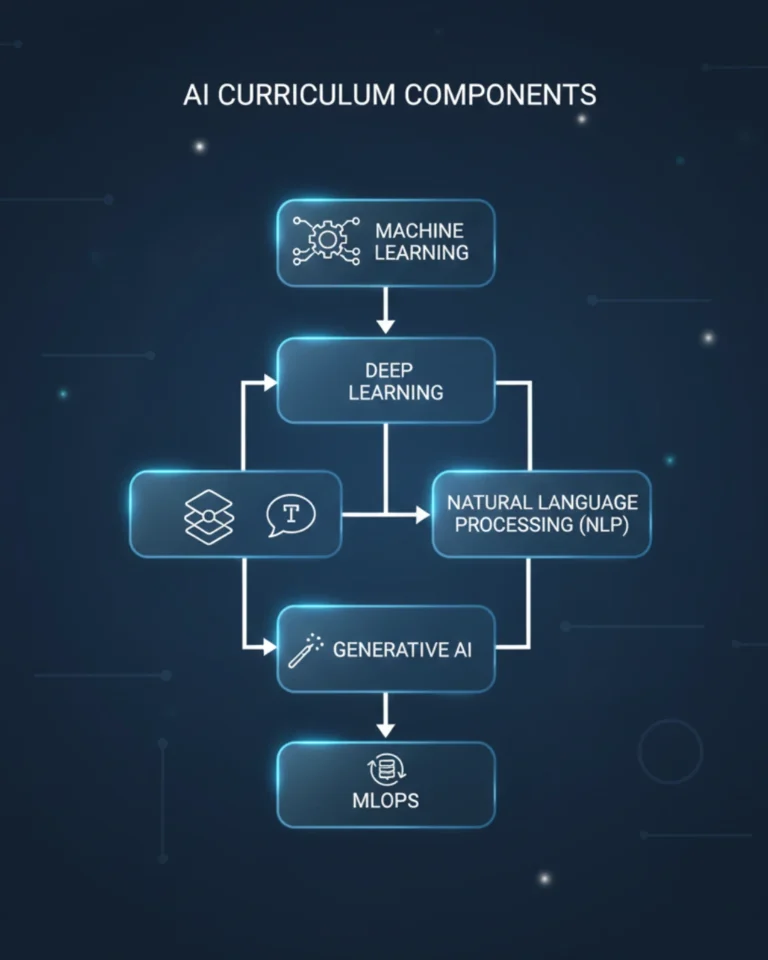
A strong program includes:
Mathematics for AI: linear algebra, probability, statistics
Fundamentals of machine learning: supervised, unsupervised, and evaluation metrics
Deep learning & neural networks (CNNs, RNNs, transformers)
Natural language processing and generative AI
MLOps and deployment: Model versioning, containers, and APIs
These areas ensure that learners move from experimental notebooks to production-ready solutions.
Projects and capstones
Top courses include at least two hands-on projects: one exploratory data cleaning + model building and one production-oriented API + deployment. These projects should be on real data sets with documentation that can be presented during interviews.
How to choose the best artificial intelligence course
Follow a checklist: curriculum freshness, instructor experience, project depth, placement assistance, and alumni outcomes. Prioritize courses that offer mentorship, end-to-end projects, and frequent assessments. For program comparisons and structured learning paths, check the FutureLabs Training Hub. For an industry perspective on why institute quality matters, see this article: Why the Best IT Training Institute .
Practical tip: prefer courses with capstone assessments and public code repositories—these strengthen your portfolio.
Career paths and salary expectations
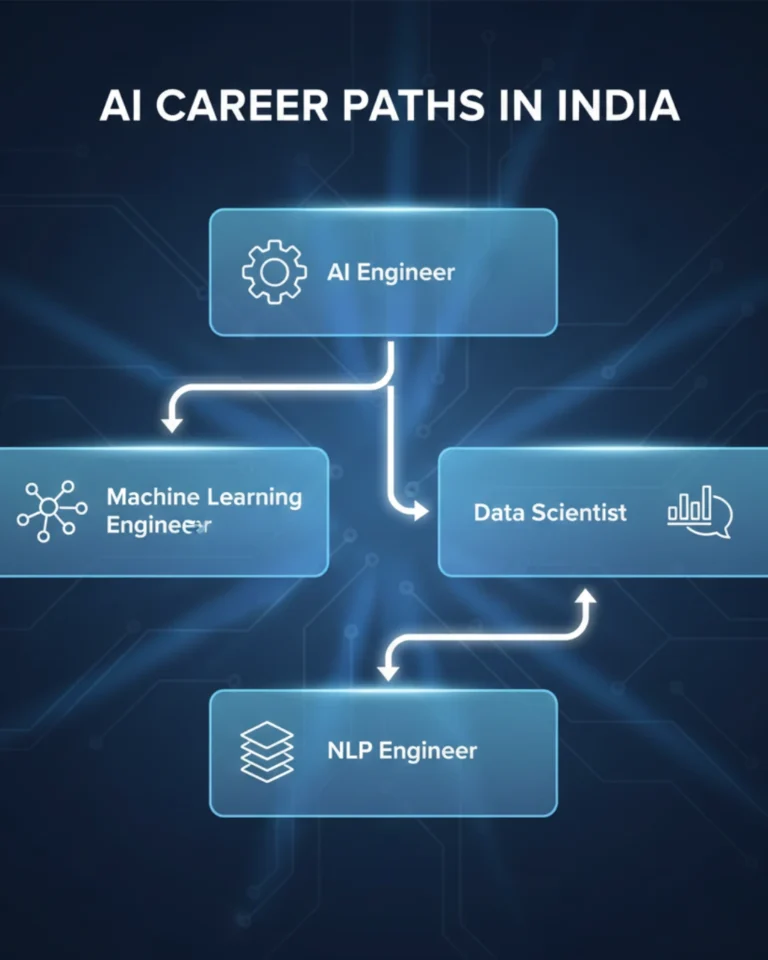
Common roles after completion include AI Engineer, Machine Learning Engineer, Data Scientist, NLP Engineer, and Deep Learning Specialist. Entry salaries differ based on location and company, although competent practitioners with project portfolios mostly get better starting packages. Continuous learning and specializations, such as MLOps and generative AI, increase market value.
Recommended next steps and links
Shortlist programs comprising both theoretical modules and deployed projects, 2-3 in number.
Review the alumni projects and placement records.
Start from a core learning path: Python → Statistics → ML basics → Deep learning.
You can position the internal and outbound links above in the location you want them to be once the page is published.
Conclusion
Picking the right AI course is a strategic choice: focus on practical projects, recent curriculum, and verifiable alumni success. Build a portfolio demonstrating deployed solutions, with iterative learning from fundamentals in Python to state-of-the-art generative AI models. If you’d like, now I can: a) post this to blog-ready HTML with internal and outbound links positioned exactly where you want, OR b) tailor the tone for your audience—student vs. professional. Let me know which you’d prefer, and I’ll deliver in a flash!
FAQs
- What is the general duration of an AI course?
Duration ranges from 3 months for accelerated bootcamps to 12+ months for comprehensive professional programs. Choose based on your time availability and the depth required. - Is a strong math background necessary to get started?
Basic comfort with algebra and probability helps, but many of the beginner courses start with applied math and build the required skills gradually. - Will an online AI course get me a job?
An online course with project work, mentorship, and placement support can really improve your job prospects—evidence of real projects is key. - What tools and languages would be best to learn first?
Start with Python, NumPy, pandas, and scikit-learn, then move to TensorFlow or PyTorch for deep learning projects. - Do employers recognize AI certifications?
Of course, certifications help, but employers are interested in proven skills: a portfolio and some practical experience count for more than mere certificates.