What Is SAP Used For? Complete Guide for Modern Businesses
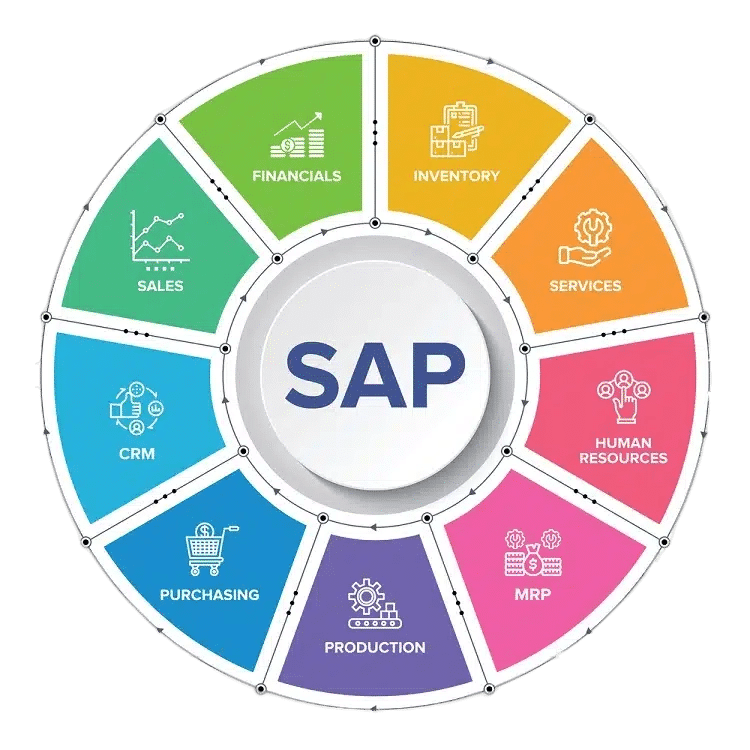
In the current rapid business setting, organizations rely on advanced digital infrastructures to streamline operations, reduce errors, and facilitate quick choices. A prime example of competent enterprise software is SAP, a well-known ERP system that unifies diverse company functions into a single integrated platform. As contemporary companies aim for peak performance, grasping its significance is vital for individuals seeking solid professional advancement. Furthermore, this system permits entities to replace older, hands-on methods with automated, information-driven instruments. Therefore, understanding what is SAP used for has become essential, as businesses in numerous sectors—from manufacturing to healthcare—are increasingly adopting these digital solutions for smooth functioning.
Table of Contents
Introduction
Drivers for SAP Adoption
The Roles of SAP in Modern Organizations
Essential Company Capabilities
Fiscal and Procurement Matters
Industry Applications of SAP
Benefits of SAP for Companies & Professionals
How SAP Drives Digital Alteration
Conclusion
FAQs
Drivers for SAP Adoption
Firms prefer SAP because it connects multiple operational areas into one harmonized structure. Additionally, the system offers immediate insight across finance, sales, procurement, human resources, and supply chain efforts. As organizations manage vast amounts of data daily, they require a reliable answer that cuts down on redundancy and enhances accuracy.
On a related note, many global enterprises utilize SAP as the backbone for their digital modernization projects. For an overview of SAP implementation across different industries, one might refer to this reliable global ERP intelligence report (→ worldwide ERP research article).

The Roles of SAP in Modern Organizations
Organizations implement SAP primarily to unify tasks, automate routine work, and improve reporting exactness. Given that enterprises rely on connected information, this system aids in streamlining processes throughout. The subsequent points depict the practical use of SAP in routine operations.
Essential Company Capabilities
ERP unifies diverse business efforts, enabling teams to operate in concert. Examples include:
It handles the entire purchasing lifecycle, spanning from the first requisition to the supplier’s final reimbursement.
It governs production timelines and material need anticipation.
It orchestrates customer order processing, delivery arrangements, and invoicing cycles.
As a result, companies gain enhanced visibility and more fluid alignment across their divisions.
Fiscal and Procurement Matters
Precision in accounting is an absolute necessity for any organization. Therefore, ERP provides support for:
Automated entries in the main ledger and associated movements.
Monitoring of expense allocations.
Supervision of money owed to and by the business.
Supplier relationship administration protocols.
Because SAP tightly weaves financial management with other functional areas, it assists organizations in readily reducing errors and upholding adherence to standards.
In this regard, beginners can explore structured IT learning paths via this professional tech training hub (FutureLabs Technology)
Industry Applications of SAP
Across diverse sectors, ERP plays a key role in digital upgrade efforts. Organizations in logistics, retail, tech, telecommunications, and public sectors use its modules for planning, execution, and performance assessment. Conversely, supply chain managers utilize this system to balance stock levels and prevent production halts. Furthermore, service-based companies leverage its analysis tools to forecast upcoming needs, monitor vital performance indicators (KPIs), and elevate the client experience. Due to these tangible gains, professionals often research what is SAP used for when evaluating career paths.

Benefits of SAP for Companies & Professionals
SAP brings measurable advantages that drive business expansion:
Quicker process automation
Enhanced judgment through data evaluation
Reduced errors introduced by human input
Improved inventory exactness
Stronger security frameworks and adherence to rules
Immediate business insight
Moreover,ERP positions often come with appealing compensation packages, as firms highly value certified experts for roles spanning finance, purchasing, analytics, and system management.
How SAP Drives Digital Alteration
The present business environment demands faster, smarter organizational output. Consequently, ERP aids enterprises in moving from outdated systems toward digital-first workflows. This transition makes businesses more agile, scalable, and focused on the customer.
Additionally, by using real-time data examination, leaders can quickly spot developing trends and make stronger decisions. It is at this point that many prospective students revisit questions about SAP’s utility as they weigh their long-term career possibilities within ERP environments.
Conclusion
To summarize, ERP is utilized to manage central organizational functions, aid sound judgment, streamline operational flows, and support digital transformation initiatives. Given the corporate demand for efficient, integrated systems, this platform remains one of the most trusted enterprise solutions globally. Whether beginning your career or already established, proficiency in SAP operations can unlock significant long-term professional progress. FutureLabs Technology offers structured coaching and real-world skill development for hands-on learning.
FAQs
1. What is SAP used for in routine business tasks?
It centralizes procedures like finance, procurement, sales, HR, and inventory oversight.
2. Is SAP suitable for those just starting out?
Yes, novices can learn SAP through structured IT courses that offer simulated settings and live data examples.
3. Which types of businesses utilize SAP?
Major players in manufacturing, CPG, IT, telecom, and retail frequently implement SAP.
4. Does acquiring SAP skills boost job prospects?
Absolutely, SAP expertise commands premium salaries as firms require credentialed specialists for both technical and functional capacities.
5. Where can one acquire professional SAP coaching?
You can explore guided ERP learning tracks on the FutureLabs Technology website.