SAP S/4HANA Explained: Features, Benefits, Career Scope & Certification Guide (2026)
In today’s rapidly evolving digital economy, businesses need an ERP system that delivers real-time insights, automation, scalability, and intelligent decision-making. This is where SAP S/4HANA comes in. It is SAP’s next-generation Enterprise Resource Planning (ERP) solution designed to simplify business processes while improving operational efficiency.
Whether you are a student planning to build a career in SAP, an IT professional looking to upgrade your skills, or a business evaluating ERP solutions, understanding SAP S/4HANA is essential.
What is SAP S/4HANA?
SAP S/4HANA (SAP Business Suite 4 SAP HANA) is SAP’s modern ERP platform built exclusively for the SAP HANA in-memory database. Unlike legacy ERP systems that rely on traditional databases, SAP S/4HANA processes large volumes of data in real time, enabling faster reporting, analytics, and business decisions.
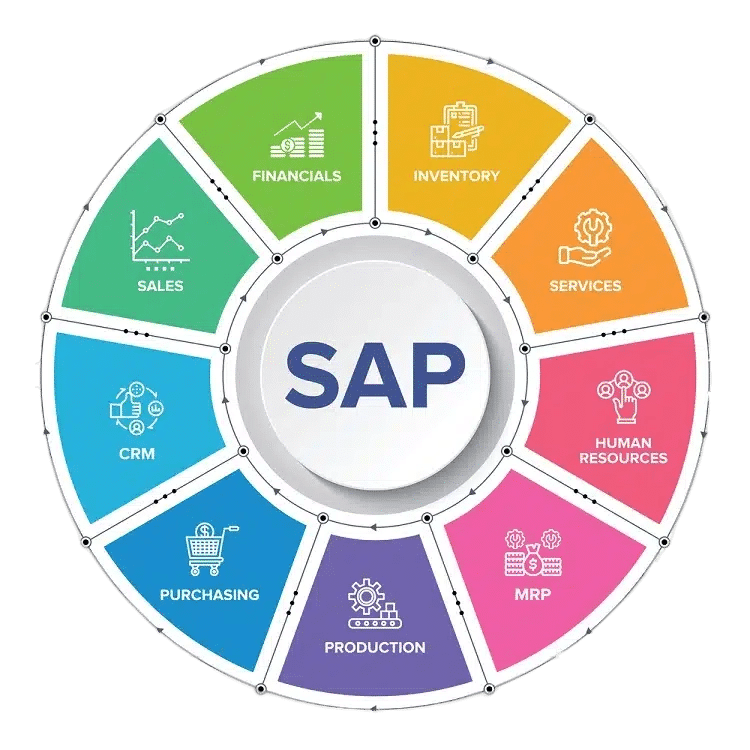
The platform integrates critical business functions into one unified system, including:
- Finance
- Procurement
- Supply Chain
- Manufacturing
- Sales
- Human Resources
- Warehouse Management
- Project Management
- Asset Management
Why is SAP S/4HANA Important?
Digital transformation has become a priority for organizations worldwide. Businesses want systems that are faster, more secure, cloud-ready, and capable of supporting AI-driven automation.
SAP S/4HANA addresses these needs by offering:
- Real-time reporting
- Simplified data models
- Embedded analytics
- Cloud deployment
- AI-powered business processes
- Better user experience through SAP Fiori
- Faster transaction processing
As a result, companies across manufacturing, retail, healthcare, banking, logistics, and telecommunications are migrating from SAP ECC to SAP S/4HANA.
Key Features of SAP S/4HANA
1. In-Memory Computing
One of the biggest advantages of SAP S/4HANA is its in-memory database technology. Instead of reading data from slow disk storage, the SAP HANA database stores data in memory, allowing businesses to process millions of records almost instantly.
Benefits
- Faster reports
- Real-time analytics
- Improved system performance
- Reduced processing time
2. Simplified Data Model
Traditional ERP systems often store duplicate information across multiple tables.
SAP S/4HANA simplifies the database structure, reducing complexity while improving processing speed and system maintenance.
Advantages include:
- Less data redundancy
- Faster queries
- Easier maintenance
- Better scalability
3. SAP Fiori User Experience
SAP S/4HANA uses SAP Fiori, a modern, role-based user interface that works across desktops, tablets, and mobile devices.
Features include:
- Personalized dashboards
- Responsive design
- Mobile accessibility
- Simplified navigation
- Better productivity
4. Embedded Analytics
Users no longer need separate Business Intelligence tools for many reporting needs.
SAP S/4HANA provides:
- Interactive dashboards
- Real-time KPIs
- Live financial reports
- Inventory analytics
- Sales insights
This enables faster decision-making without waiting for batch reports.
5. Artificial Intelligence Integration
Modern SAP S/4HANA systems integrate Artificial Intelligence and Machine Learning to automate routine tasks.
Examples include:
- Invoice matching
- Demand forecasting
- Fraud detection
- Intelligent recommendations
- Predictive maintenance
These capabilities help organizations improve efficiency while reducing operational costs.
Major SAP S/4HANA Modules
Finance (SAP S/4HANA Finance)
Manages:
- General Ledger
- Accounts Payable
- Accounts Receivable
- Asset Accounting
- Financial Reporting
- Profitability Analysis
Professionals with expertise in this module are among the highest-paid SAP consultants.
Materials Management (SAP MM)
Supports:
- Procurement
- Inventory
- Vendor Management
- Purchase Orders
- Goods Receipt
- Invoice Verification
It is widely used by manufacturing and retail organizations.
Sales and Distribution (SAP SD)
Manages:
- Customer Orders
- Pricing
- Shipping
- Billing
- Credit Management
This module is essential for businesses handling product sales and customer distribution.
Production Planning (SAP PP)
Used by manufacturing companies to manage:
- Production Orders
- Material Planning
- Capacity Planning
- Shop Floor Operations
Extended Warehouse Management (SAP EWM)
Designed for:
- Warehouse Automation
- Inventory Tracking
- Barcode Integration
- Warehouse Optimization
Human Capital Management (SuccessFactors)
Supports HR operations including:
- Recruitment
- Payroll Integration
- Employee Performance
- Learning Management
- Workforce Planning
| Feature | SAP ECC | SAP S/4HANA |
|---|---|---|
| Database | Multiple Databases | SAP HANA Only |
| Performance | Standard | Real-Time |
| Analytics | External BI | Embedded Analytics |
| User Interface | SAP GUI | SAP Fiori |
| AI Support | Limited | Advanced |
| Cloud Ready | Partial | Fully Supported |
| Automation | Basic | Intelligent Automation |
| Future Updates | Limited | Continuous Innovation |
| Feature | SAP ECC | SAP S/4HANA |
|---|---|---|
| Database | Multiple Databases | SAP HANA Only |
| Performance | Standard | Real-Time |
| Analytics | External BI | Embedded Analytics |
| User Interface | SAP GUI | SAP Fiori |
| AI Support | Limited | Advanced |
| Cloud Ready | Partial | Fully Supported |
| Automation | Basic | Intelligent Automation |
| Future Updates | Limited | Continuous Innovation |
Benefits of SAP S/4HANA for Businesses
Organizations implementing SAP S/4HANA gain several strategic advantages:
- Faster financial closing
- Real-time inventory visibility
- Improved supply chain management
- Better customer service
- Lower operational costs
- Enhanced compliance
- Better forecasting
- Integrated analytics
- Improved productivity
- Scalable cloud architecture
These benefits help businesses improve efficiency while making data-driven decisions.
Career Scope in SAP S/4HANA
The demand for SAP S/4HANA professionals continues to grow as companies migrate from legacy ERP systems. Career opportunities include:
- SAP S/4HANA Functional Consultant
- SAP FICO Consultant
- SAP MM Consultant
- SAP SD Consultant
- SAP ABAP Developer
- SAP Basis Administrator
- SAP Fiori Consultant
- SAP BTP Consultant
- SAP EWM Consultant
- SAP Project Manager
- SAP Solution Architect
Professionals with hands-on experience in SAP S/4HANA are highly sought after across industries.
| Experience | Average Salary |
|---|---|
| Fresher | ₹4–8 LPA |
| 2–5 Years | ₹8–16 LPA |
| 5–8 Years | ₹16–28 LPA |
| 8–12 Years | ₹28–45 LPA |
| 12+ Years | ₹45 LPA and Above |
Who Should Learn SAP S/4HANA?
SAP S/4HANA is suitable for:
- Commerce Graduates
- B.Tech Students
- MBA Professionals
- Finance Executives
- HR Professionals
- Supply Chain Specialists
- ERP Consultants
- IT Professionals
- Working Professionals looking to upskill
Choosing a Best SAP Training Institute that provides live projects, certification guidance, and placement assistance can help learners become job-ready.
Why Choose Future Labs Technology?
At Future Labs Technology, our SAP S/4HANA Training programs are designed to prepare students and professionals for real-world ERP careers.
Our Highlights
- Industry-Experienced Trainers
- Live SAP S/4HANA Projects
- Hands-on Practical Training
- 100% Placement Assistance*
- Mock Interviews
- Resume Building
- Certification Guidance
- Online & Classroom Training
- Flexible Learning Schedule
- Career Counseling
If you’re looking for the Best SAP Training Institute, SAP Course with Placement, or SAP Certification Training, Future Labs Technology provides industry-oriented learning to help you succeed.