
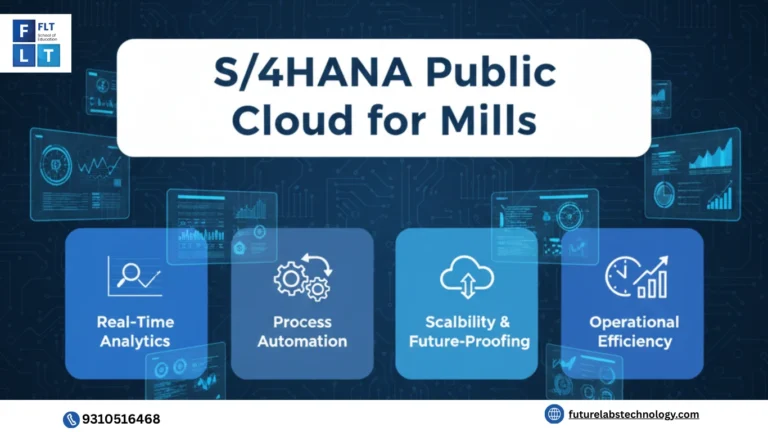
Boost Efficiency and Operational Growth with S/4HANA Public Cloud for Mills
In today’s competitive industrial environment, understanding S/4HANA Public Cloud for Mills is crucial for businesses aiming to enhance operational efficiency and scale effectively. This cloud-based ERP solution enables mills to automate workflows, track real-time production data, and optimize resource management. By leveraging this technology, companies can reduce downtime, improve decision-making, and stay ahead in a rapidly evolving market.
Additionally, professionals seeking to upgrade their ERP and digital transformation skills can benefit from structured training programs, such as FutureLabs Technology’s which provides practical, industry-ready knowledge.
Table of Contents
-
Introduction
-
Why S/4HANA Public Cloud for Mills is Essential in 2025
-
Key Features and Benefits for the Milling Industry
-
Real-Time Analytics and Reporting
-
Automation of Manufacturing Processes
-
Scalability and Cloud Integration
-
-
Implementation Strategies for Mills
-
Stepwise Integration
-
Staff Training and Upskilling
-
-
Future Trends in Cloud ERP for Mills
-
Conclusion
-
FAQs
Why S/4HANA Public Cloud for Mills is Essential in 2025
The milling industry faces challenges such as resource optimization, process inefficiencies, and rising operational costs. Implementing cloud ERP for mills addresses these challenges by offering cloud-based analytics, real-time monitoring, and automated reporting. Enables mills to make data-driven decisions and streamline operations effectively.
Key Features and Benefits for the Milling Industry
Real-Time Analytics and Reporting
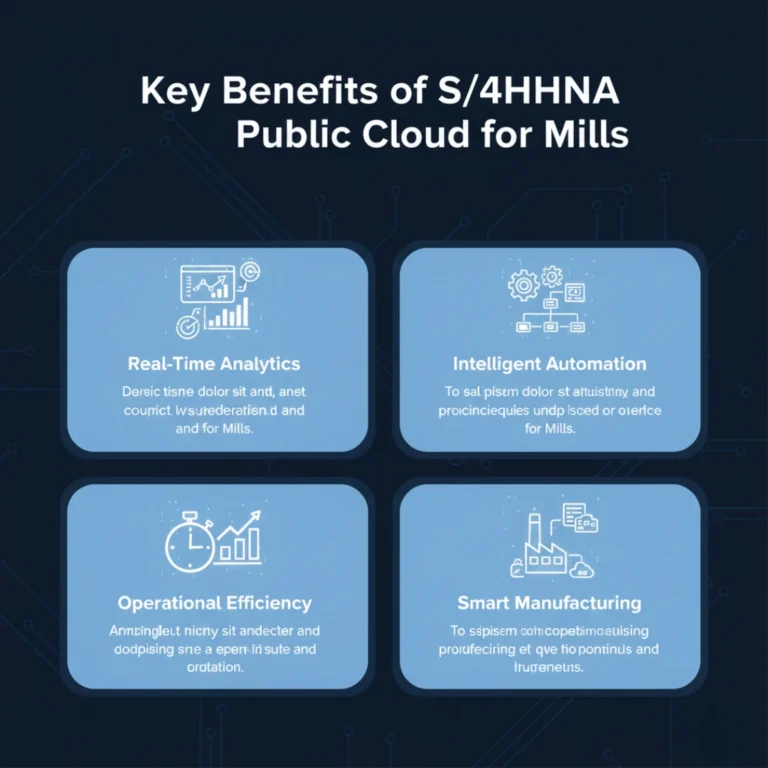
S/4HANA Public Cloud for Mills provides real-time dashboards to track production, inventory, and quality metrics. Companies can quickly identify bottlenecks and implement solutions, ensuring seamless operations. For professionals looking to enhance their ERP skills, programs like Explore detailed course modules offer hands-on learning with practical insights.
Automation of Manufacturing Processes
Automation reduces manual intervention and errors in milling operations. From scheduling production runs to monitoring equipment, S/4HANA ensures precision and efficiency. Businesses can save costs while increasing throughput.
Scalability and Cloud Integration
As mills grow, ERP for mills scales effortlessly to accommodate increased production demands. Integration with other cloud tools allows seamless data flow and enhanced operational control. For professionals and businesses aiming to strengthen their digital capabilities, exploring a detailed guide on skill-focused IT training can further support smooth ERP adoption and long-term operational success.
Implementation Strategies for Mills
Stepwise Integration
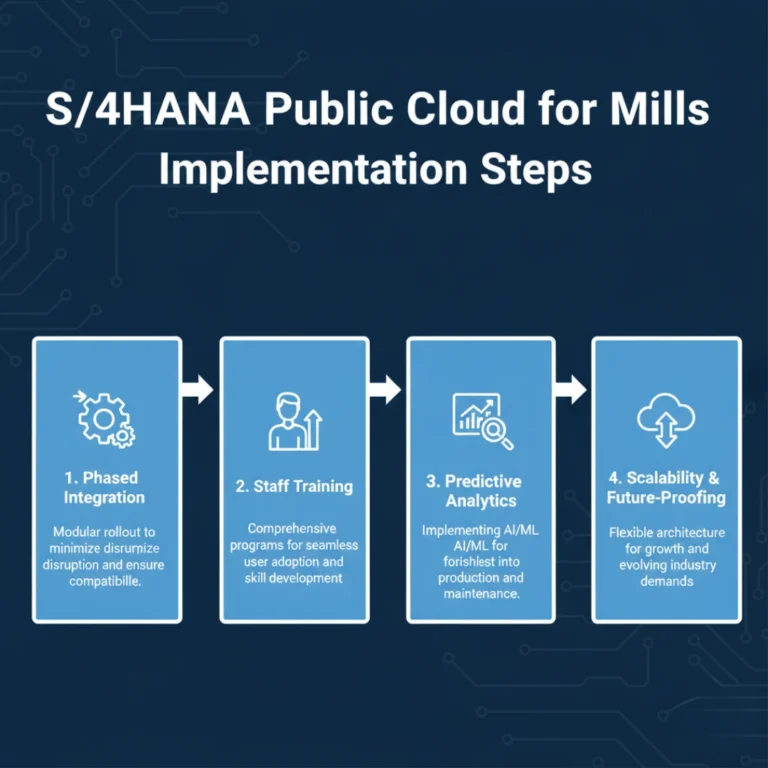
A phased implementation ensures minimal disruption. Mills can start with core modules like production and inventory before integrating advanced analytics and automation tools.
Staff Training and Upskilling
Effective adoption requires employee training. Professionals can enhance their skillset by enrolling in ERP-focused programs. Insights on why students prefer structured learning are detailed in the top reasons students choose the best IT training institute.
Future Trends in Cloud ERP for Mills
-
AI-Driven Predictive Analytics: Enables predictive maintenance and process optimization.
-
IoT Integration: Real-time equipment monitoring enhances production efficiency.
-
Sustainable Manufacturing Practices: ERP solutions support green initiatives and resource optimization.
Conclusion
The adoption of S/4HANA Public Cloud for Mills is reshaping the industrial landscape. By leveraging cloud ERP, real-time analytics, and automation, mills can achieve higher operational efficiency, reduce costs, and scale sustainably. Professionals trained in ERP solutions gain a competitive advantage in the evolving industrial ecosystem.
FAQs
1. What is cloud ERP for mills?
It is a cloud-based ERP solution designed specifically for milling industries to optimize production, automate processes, and enable real-time decision-making.
2. How does ERP improve efficiency in mills?
Through automation, real-time analytics, and predictive reporting, mills can reduce downtime, improve accuracy, and increase throughput.
3. Can small-scale mills implement S/4HANA Public Cloud?
Yes, it is scalable and can be implemented in both small and large operations with phased integration.
4. What are the key benefits for employees using this ERP system?
Employees gain access to modern tools, streamlined workflows, and skill development opportunities for advanced ERP proficiency.
5. Where can professionals learn S/4HANA skills effectively?
Structured programs at institutes like FutureLabs Technology provide practical, industry-ready ERP training.
Thank you for sharing such a well-structured and easy-to-digest post. It’s not always easy to find content that strikes the right balance between informative and engaging, but this piece really delivered. I appreciated how each section built on the last without overwhelming the reader. Even though I’ve come across similar topics before, the way you presented the information here made it more approachable. I’ll definitely be returning to this as a reference point. It’s the kind of post that’s genuinely helpful no matter your level of experience with the subject. Looking forward to reading more of your work—keep it up! profis-vor-ort.de