

Understanding SAP GRC Features, Benefits, and Implementation Guide
In today’s competitive business environment, organizations rely on SAP GRC to manage governance, risk, and compliance efficiently. This solution helps companies streamline processes, minimize operational risks, and ensure regulatory compliance. While companies may also consider external programs, such as a French language course in Delhi, the real efficiency gains come from integrating a robust GRC system.
Implementing SAP GRC enables centralized control, enhanced audit processes, and full transparency across departments, allowing executives to make informed decisions while reducing manual monitoring efforts.
Table of Contents
Introduction
What is SAP GRC?
Key Features and Functionalities of SAP GRC
Benefits of Implementing SAP GRC
SAP GRC Implementation Process
Best Practices for SAP GRC
Conclusion
FAQs
What is SAP GRC?
What is SAP GRC?
SAP GRC (Governance, Risk, and Compliance) is a comprehensive suite of solutions that allows organizations to monitor, manage, and mitigate risks while adhering to internal policies and external regulations. The system integrates seamlessly with enterprise software to provide real-time reporting, risk assessments, and workflow management.
For professionals seeking hands-on experience, platforms like FutureLabs Technology offer training in SAP GRC and enterprise risk management. Additionally, understanding why learners choose specialized programs can improve internal compliance strategies (Medium article reference).
Key Features and Functionalities
SAP GRC offers a wide range of functionalities that help organizations maintain governance, reduce risks, and ensure compliance efficiently.
1. Risk Management
The risk management module identifies, assesses, and mitigates operational risks. Real-time dashboards and alerts allow managers to act proactively, ensuring smoother operations and better decision-making.
2. Access Control
Access Control manages user permissions across enterprise systems, preventing unauthorized access and enforcing segregation of duties. Ensures data security while maintaining operational integrity.

3. Audit Management
Audit Management simplifies audit processes by enabling auditors to plan, execute, and monitor audits effectively. With centralized documentation, companies can maintain compliance effortlessly.
4. Process Control
Process Control monitors business processes to identify gaps and ensures adherence to compliance policies in real-time. It helps organizations maintain internal checks and reduce errors.
Benefits of Implementing
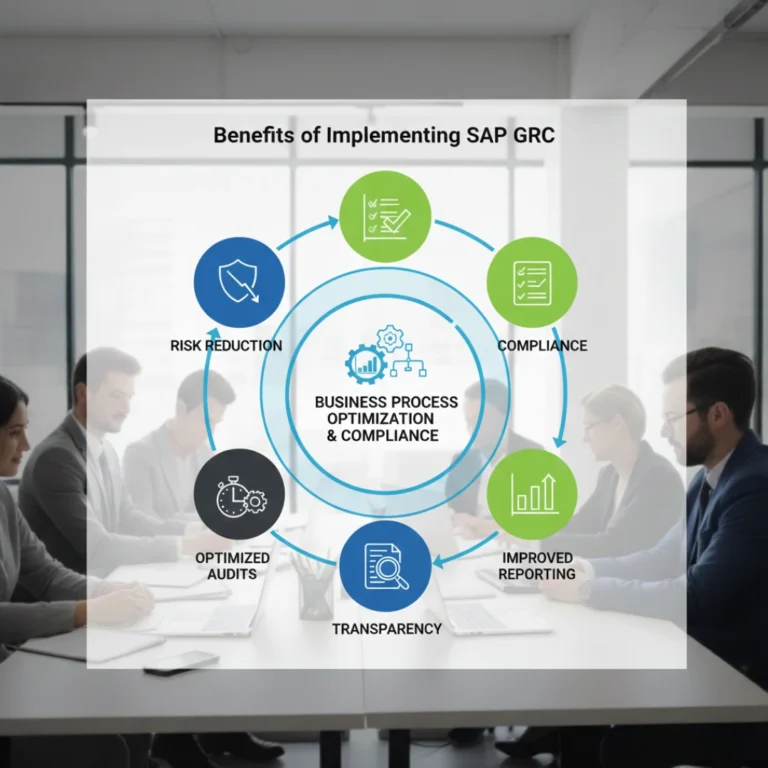
Implementing brings multiple advantages for organizations:
Minimizes operational and regulatory risks
Ensures compliance with global standards
Improves decision-making with real-time analytics
Increases transparency across departments
Optimizes internal audit and control processes
Organizations can also link employee skill development programs, like a French language course in Delhi, to track learning records and compliance training efficiently.
Learn more about FutureLabs Technology courses that provide practical SAP GRC training.
Implementation Process
Assessment of Business Needs: Identify organizational risks, compliance requirements, and governance priorities.
System Configuration: Configure SAP GRC modules according to organizational structure and compliance needs.
Integration with ERP Systems: Connect SAP GRC with enterprise systems for real-time data monitoring.
User Training: Train staff to use the system effectively and maintain governance standards.
Continuous Monitoring: Track performance, address gaps, and optimize processes regularly.
Best Practices for SAP GRC
Keep risk policies and compliance frameworks updated regularly
Integrate GRC into daily business operations
Use dashboards and analytics to manage risks proactively
Conduct periodic audits and reviews
Provide continuous training for staff
Conclusion
SAP GRC enables organizations to manage governance, risk, and compliance efficiently. By implementing this system, businesses can ensure regulatory adherence, reduce operational risks, and improve overall transparency. Even when companies invest in external skill programs like a French language course in Delhi, integrating ensures consistent tracking, reporting, and control across all business processes.
(FAQs)
- What is SAP GRC used for?
SAP GRC helps organizations manage governance, risk, and compliance across enterprise systems. Can SAP GRC integrate with ERP systems?
Yes, SAP GRC integrates seamlessly with ERP and other enterprise applications for real-time monitoring.What are the main modules in SAP GRC?
The key modules include Risk Management, Access Control, Audit Management, and Process Control.Is suitable for small businesses?
Yes, the system is scalable, making it ideal for small, medium, and large enterprises.How does improve compliance?
It monitors processes, identifies control gaps, and ensures adherence to internal policies and external regulations.