The Complete Guide to On-page and Off-page SEO
It is no secret that SEO is not only the foundation of every web content’s success but is also fundamental to digital marketing. In the last two years, SEO has played a key role in boosting the online – and overall – performance of a wide range of businesses and brands. here are some tips to The Complete Guide to On-page and Off-page SEO
According to Internet Live Stats, the estimated number of searches on Google is 3.6 million, of which 39% influence purchases and conversion of other kinds. These facts alone emphasize the power of SEO in the digital world.
While we’re on the subject of SEO, let’s not forget about the two pillars it stands on: On-page and off-page SEO. Put simply, both these SEOs have the job of maintaining both the structure and quality of your website’s content as well as promoting it across the internet.
In this blog, we’re going to elaborate on the concepts of on-page and off-page SEO. Ready to get started? Let’s go!
Table of Contents
What Is On-page SEO?
Key On-page SEO Elements Checklist
Best Practices to Improve Your On-page SEO
What Is Off-page SEO?
Best Practices to Improve Your Off-page SEO
Build a Career in Search Engine Optimization (SEO) with Us
Conclusion
Frequently Asked Questions (FAQs)
What Is On-page SEO?
On-page SEO refers to the optimization techniques used to improve the visibility and rankings of individual web pages on search engines. These techniques focus on elements that are directly within your control on your website.
On-page SEO involves optimizing both visible content and behind-the-scenes elements, such as the HTML source code. When done correctly, it helps search engines understand your content better and improves the user experience for visitors.
Key On-page SEO Elements Checklist
Below is a checklist of major on-page SEO elements that should be optimized to improve website performance:
-
Site loading speed
-
Smartphone-friendliness
-
Clean and descriptive URL structure
-
Meta title and meta description
-
Proper use of headings (H1, H2, H3)
-
High-quality and relevant page content
-
Internal linking structure
-
Alt text for images
-
Keyword research and strategic usage
-
Page responsiveness and user experience

Best Practices to Improve Your On-page SEO
Once the core elements are in place, following best practices can further enhance on-page optimization.
Prioritize Using Target Keywords
Target keywords are selected through detailed research based on what your audience is actively searching for. To attract the right users, your content should address their questions, problems, and needs.
This applies not only to written content but also to videos and images. While selecting keywords, remember the basic formula:
High search volume + low competition = ideal target keyword
Understanding user intent and consumer behavior plays a vital role in effective keyword usage.
Focus on Providing a Smooth User Experience
With an abundance of content available online, users expect more than just information. What truly differentiates websites is the overall browsing experience.
Here are some proven ways to enhance user experience:
-
Improve page loading speed
-
Add a search bar for easy navigation
-
Create clear visual separation between categories
-
Include helpful links in the footer
-
Optimize pages for mobile and tablet devices
Optimize Images for Performance
Images play a significant role in user engagement, but unoptimized images can slow down your website. This negatively affects both rankings and user experience.
Optimizing image size, format, and loading speed is essential. Several free plugins can help compress images without compromising quality, ensuring faster page load times.
What Is Off-page SEO?
Off-page SEO is the second major pillar of search engine optimization. Unlike on-page SEO, which focuses on internal website improvements, off-page SEO involves external efforts to boost website authority and credibility.
In simple terms, off-page SEO focuses on how your website is perceived across the internet. It helps build trust, relevance, and authority in the eyes of search engines.

Best Practices to Improve Your Off-page SEO
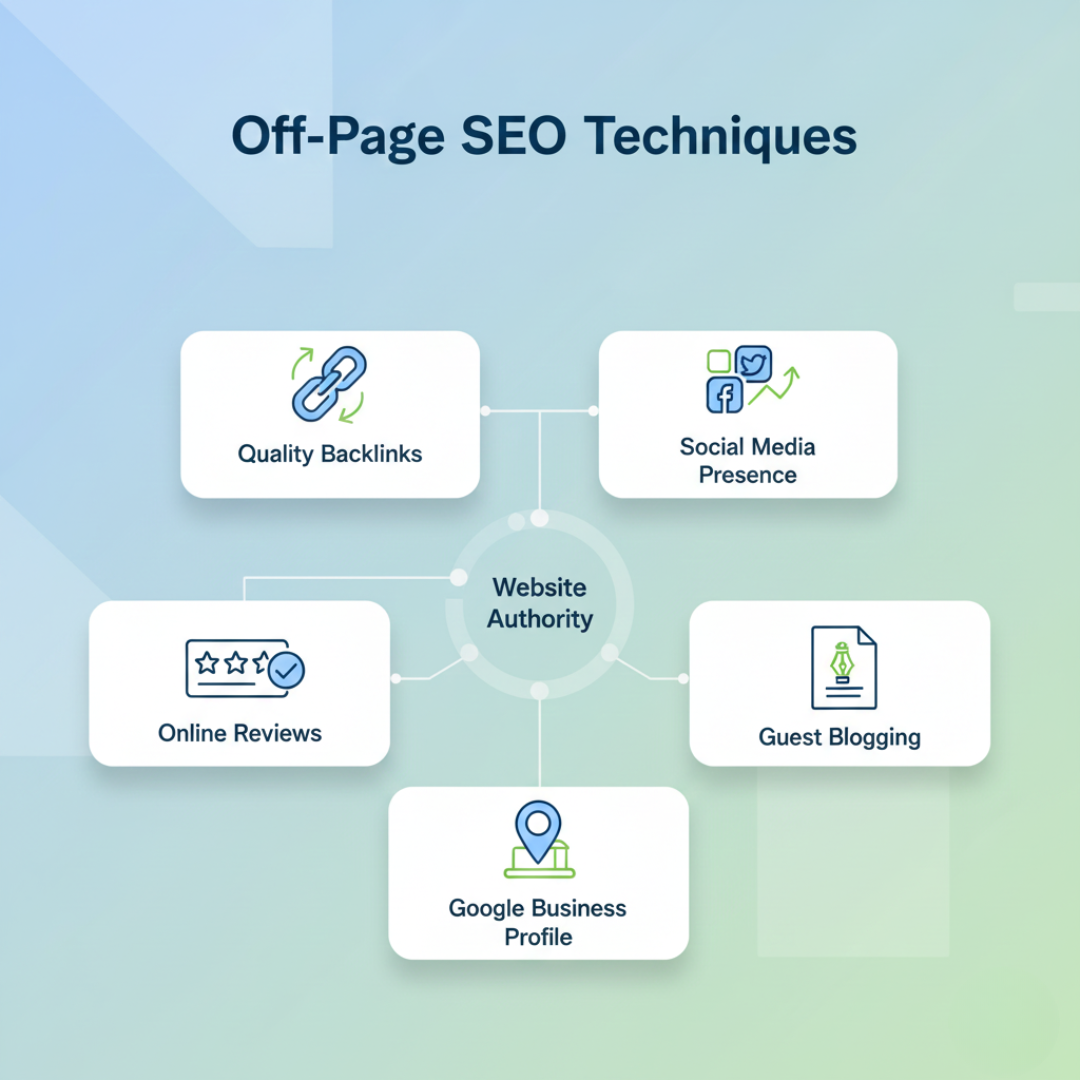
Improving off-page SEO requires consistency and strategic efforts. Below are three essential practices to focus on:
Using Backlinks Strategically
Backlinks are one of the strongest indicators of authority for search engines. However, quality matters far more than quantity.
Earning backlinks from credible, high-authority websites takes time and effort. In many cases, it also requires proactive outreach and collaboration.
Build a Strong Social Media Presence
Social media plays a powerful role in increasing brand visibility and online recognition. Active participation on social platforms can indirectly support SEO efforts by driving traffic and engagement.
Regardless of your industry, maintaining professional social media profiles and sharing valuable content helps strengthen your online presence. For conversion-focused campaigns, working with a social media marketer can deliver better results.
Collect Social Proof for Your Business
Social proof enhances trust and credibility for both users and search engines. Effective ways to build social proof include:
-
Creating and optimizing a Google Business Profile
-
Displaying client reviews, testimonials, and collaborations
-
Publishing guest blogs on authoritative and high-traffic websites
Build a Career in Search Engine Optimization (SEO) with Us
SEO concepts may appear complex at first, but once understood, they become practical and exciting to implement. On-page and off-page SEO clearly demonstrate how structured strategies can drive real results.
If this guide has sparked your interest in SEO as a career, you may consider professional training. The Search Engine Optimization Certification course offered by Future Labs Technology equips learners with industry-relevant skills and hands-on knowledge required to become SEO specialists.
The program has helped many students build successful careers in digital marketing and freelancing. You can explore the course details to take your first step toward a future in SEO.
Conclusion
On-page and off-page SEO together form the backbone of a successful SEO strategy. While on-page SEO strengthens your website internally, off-page SEO builds credibility and authority externally.
By applying the best practices discussed in this guide, businesses can improve search visibility, user experience, and long-term growth. Consistency, quality, and strategic execution remain the keys to SEO success.
(FAQs)
1. What is the main difference between on-page and off-page SEO?
On-page SEO focuses on optimizing website elements, while off-page SEO focuses on external promotion and authority building.
2. Is on-page SEO more important than off-page SEO?
Both are equally important and work best when implemented together.
3. How long does SEO take to show results?
SEO is a long-term strategy, and results usually appear within a few months.
4. Are backlinks still important for SEO?
Yes, high-quality backlinks remain one of the most important ranking factors.
5. Can beginners learn SEO easily?
Yes, with proper guidance and structured learning, SEO is accessible even to beginners.